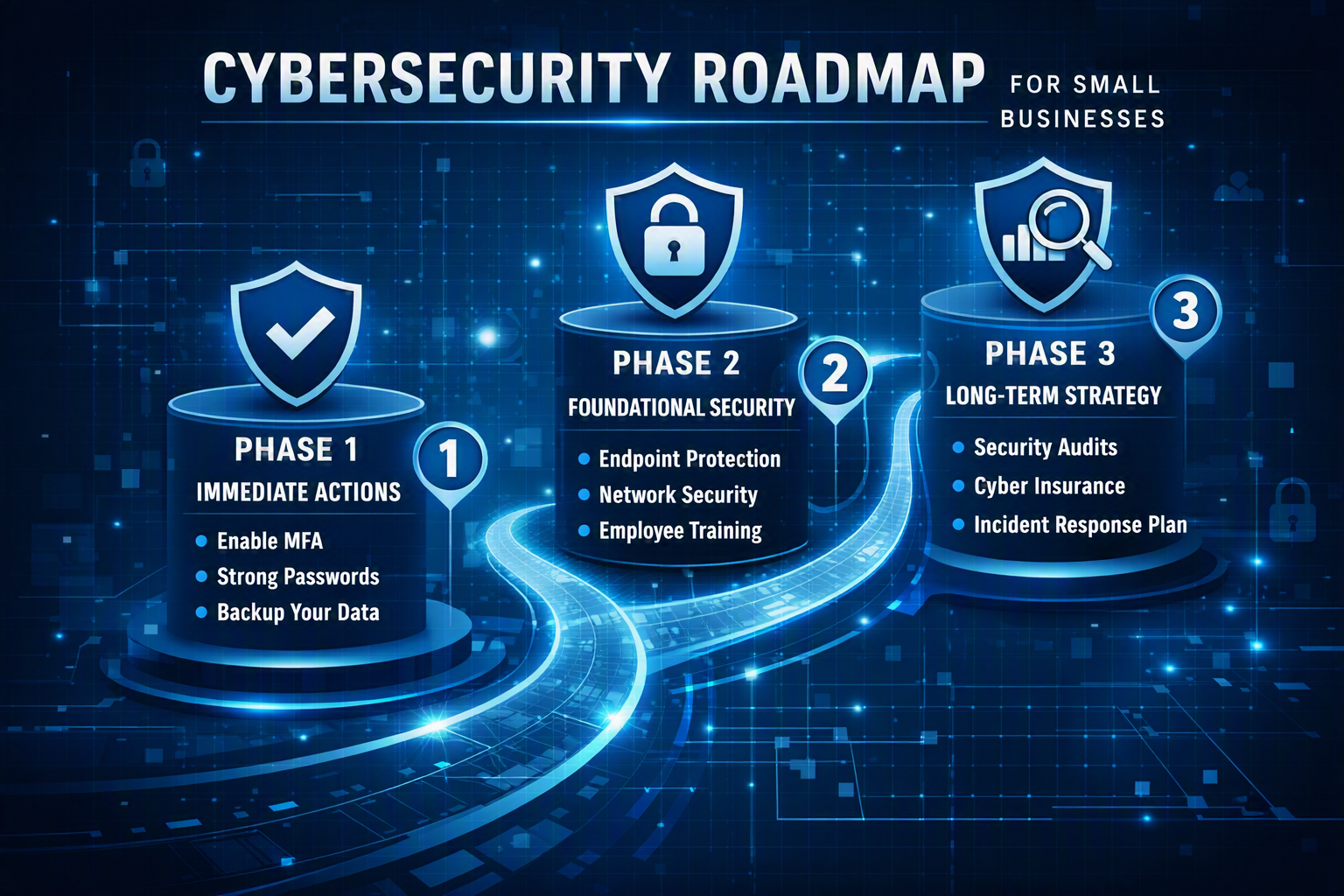
ABOUT US

Powering Progress by Protecting Your Digital World

At JMG, we specialize in delivering cutting-edge network security solutions designed to safeguard your digital infrastructure from evolving threats. Our team of certified security experts brings deep industry knowledge and a results-driven mindset to every engagement. With a strong track record of uncovering vulnerabilities in even the most complex systems, we provide tailored, end-to-end protection strategies that align with your unique needs and business goals.

Ready to safeguard your network?

Contact us today!
Empower Your Business with Managed IT Services

Effortlessly liberate your workforce from technical struggles with our comprehensive Managed IT Services. At JMG Services, Inc., we understand the pivotal role of seamless business operations. Our dedicated team provides round-the-clock monitoring and proactive maintenance for your servers, desktops, network equipment, and cloud services, ensuring optimal performance and minimizing any potential disruptions. With our expert management of your IT infrastructure, you can focus entirely on driving your business forward.

Contact us today!
Cybersecurity Training

Comprehensive training programs to educate your employees about potential cybersecurity threats and best practices for safeguarding sensitive data.

Contact us today!
Continuous Monitoring and Maintenance
Monthly Vulnerability Scanning

Stay ahead of potential threats with our monthly scanning services, designed to identify and eliminate any new vulnerabilities that may arise during network modifications or updates.

Network Penetration Testing

Allow us to conduct secure and efficient vulnerability exploitations. Our meticulous process includes comprehensive step-by-step guidance for resolving each identified issue, ensuring robust protection for your network. Empower your network with our cutting-edge security solutions. Contact us to discuss your security needs and build a fortified digital infrastructure.

Contact us today!

Cloud Services Management

Seamless integration and proactive management of cloud services to enhance scalability, flexibility, and data accessibility for your business operations.

Contact us today!
IT Cost Optimization

Expert guidance to streamline IT expenses and maximize the efficiency of your IT investments, ensuring cost-effective and sustainable operations.

Contact us today!

WHAT WE DO

Regulatory Compliance Management

JMG Services, Inc. helps your organization stay ahead of evolving regulatory requirements. We assess your systems, policies, and workflows against industry standards to identify gaps and strengthen compliance across your entire environment. Whether you’re navigating HIPAA, PCI‑DSS, SOX, or other frameworks, we provide clear guidance, practical controls, and ongoing monitoring to keep your operations aligned and audit‑ready. With JMG, compliance becomes a proactive, manageable part of your security strategy—not a last‑minute scramble.
Ready to safeguard your network? Contact us today!

IT Cost Optimization

JMG Services, Inc. helps you reduce technology expenses without sacrificing performance or security. We analyze your infrastructure, licensing, cloud usage, and support workflows to identify waste, eliminate redundancies, and streamline operations. Our recommendations focus on practical savings—right‑sizing resources, consolidating services, and improving efficiency—so every dollar you invest delivers measurable value. With JMG, your IT budget becomes lean, predictable, and aligned with your business goals.
Ready to safeguard your network? Contact us today!

Network Security Audits

JMG Services, Inc. delivers comprehensive network security audits that expose vulnerabilities before attackers can exploit them. We analyze your infrastructure end‑to‑end—firewalls, endpoints, cloud assets, access controls, and internal traffic—to identify misconfigurations, weak points, and emerging risks. Our audits provide clear, actionable recommendations that strengthen your defenses, tighten compliance, and ensure your environment is operating at peak security. With JMG, you gain visibility, control, and confidence in every layer of your network.
Ready to safeguard your network? Contact us today!

Palo Alto Solutions Provider

JMG Services delivers trusted Palo Alto Networks solutions designed to strengthen cybersecurity, improve visibility, and protect modern digital environments. With deep expertise in next‑generation firewalls, cloud security, endpoint protection, and Zero Trust architecture, we help organizations deploy, manage, and optimize Palo Alto technologies with confidence. Our goal is to provide reliable, scalable, and effective security solutions that support long‑term business growth and ensure your systems remain protected against evolving threats.

Ready to safeguard your network? Contact us today!

Network Penetration Testing

Allow us to conduct secure and efficient vulnerability exploitations. Our meticulous process includes comprehensive step-by-step guidance for resolving each identified issue, ensuring robust protection for your network. Empower your network with our cutting-edge security solutions. Contact us to discuss your security needs and build a fortified digital infrastructure.
Ready to safeguard your network? Contact us today!

Data Backup and Recovery

JMG Services, Inc. keeps your business protected from the unexpected. Our secure, automated backup solutions safeguard critical data across servers, endpoints, and cloud environments, ensuring nothing is ever lost to hardware failure, human error, or cyber incidents. When downtime strikes, our rapid recovery process gets your systems restored quickly and cleanly, so your operations stay resilient and your team stays productive. With JMG, your data is always backed up, always recoverable, and always ready when you need it.
Ready to safeguard your network? Contact us today!

OUR TEAM

OUR BLOG

How Much Should a Business Spend on Cybersecurity? A Practical Budgeting Guide

Cybersecurity budgeting is one of the most confusing parts of running a modern business. Leaders know they need protection, but they often don’t know how much is enough, what to prioritize, or how to justify the cost. The truth is that cybersecurity isn’t just a technical expense — it’s a business risk decision.

This guide breaks down how much businesses typically spend, what factors influence the right budget, and how to invest wisely without overspending.

Why Cybersecurity Budgeting Matters More Than Ever

Cyberattacks are no longer rare events. Automated tools allow criminals to target thousands of businesses at once, and small organizations are often hit hardest because they lack mature defenses. A single incident can cost tens or hundreds of thousands of dollars in downtime, legal fees, lost data, and reputation damage.

Budgeting correctly isn’t about buying tools — it’s about reducing the financial impact of risk.

How Much Do Businesses Typically Spend?

Most industry benchmarks suggest:

  • Small businesses: 5–10% of their IT budget
  • Mid‑sized businesses: 10–15% of their IT budget
  • High‑risk industries (finance, healthcare, legal): 15–20%+

Another way to look at it: Businesses generally spend $1,500–$5,000 per employee per year on cybersecurity when combining tools, services, and training.

But these are averages — not prescriptions. Your ideal budget depends on your risk profile.

The 5 Factors That Determine Your Ideal Cybersecurity Budget

1. Industry & Compliance Requirements

If you handle sensitive data (health records, financial info, legal documents), you’re required to meet higher security standards. Compliance frameworks like HIPAA, PCI‑DSS, and CJIS significantly increase the necessary investment.

2. Size and Complexity of Your Environment

More employees, devices, cloud apps, and remote workers = more attack surface.

3. Your Current Security Maturity

If you’re starting from scratch, you’ll need a larger upfront investment. Mature organizations can maintain with smaller annual budgets.

4. The Value of Your Data

Ask yourself: What would it cost the business if our data was stolen, encrypted, or leaked? Your budget should reflect that risk.

5. Your Appetite for Risk

Some businesses want maximum protection. Others accept more risk to save money. The right budget aligns with leadership’s tolerance.

Where Should Your Cybersecurity Budget Go? (Priority Breakdown)

1. Foundational Security (40–50%)

  • Endpoint protection (EDR/XDR)
  • Firewalls & network security
  • Patch management
  • Secure configurations

These are your “must‑have” controls.

2. Identity & Access Security (20–25%)

  • MFA everywhere
  • Password managers
  • Privileged access management

Identity is the #1 attack vector today.

3. Monitoring & Response (15–20%)

  • Security operations center (SOC)
  • Log monitoring
  • Incident response planning

This is what keeps small issues from becoming disasters.

4. Training & Human Risk Reduction (10–15%)

  • Security awareness training
  • Phishing simulations

Employees are your largest vulnerability — and your strongest defense.

How to Build a Smart Cybersecurity Budget (Even If You’re Small)

Step 1: Identify your biggest risks

You don’t need to fix everything at once. Focus on the threats most likely to impact your business.

Step 2: Prioritize high‑ROI controls

MFA, patching, EDR, and backups provide massive protection for relatively low cost.

Step 3: Plan for ongoing maintenance

Cybersecurity isn’t a one‑time purchase. Budget for monitoring, updates, and training.

Step 4: Work with a trusted security partner

A good partner helps you avoid overspending while still meeting your risk and compliance needs.

Final Takeaway

There’s no one‑size‑fits‑all cybersecurity budget. But most businesses can dramatically reduce risk by investing in the right mix of tools, training, and expert guidance. The key is to treat cybersecurity as a strategic business investment — not just an IT line item.

READ MORE
The 10 Most Common Cybersecurity Mistakes Small Businesses Make

Small businesses often assume cybercriminals only target large enterprises. In reality, attackers increasingly focus on smaller organizations because they tend to have weaker defenses, limited IT staff, and valuable data that’s easier to steal. Understanding where most companies go wrong is the first step toward building a stronger security posture.

Below are the 10 most common cybersecurity mistakes small businesses make — and how to avoid them.

1. Relying on Weak or Reused Passwords

Weak passwords remain one of the easiest entry points for attackers. Many employees reuse passwords across multiple systems, making credential‑stuffing attacks highly effective.

Fix: Enforce strong password policies and implement password managers to simplify secure habits.

2. Skipping Multi‑Factor Authentication (MFA)

MFA is one of the most effective security controls available, yet many small businesses still rely on single‑factor logins.

Fix: Require MFA for email, VPN, cloud apps, and administrative accounts.

3. Failing to Patch Systems Regularly

Unpatched software is a goldmine for attackers. Even a single outdated application can expose your entire network.

Fix: Implement automated patch management and monthly vulnerability reviews.

4. Assuming Antivirus Is Enough

Traditional antivirus tools can’t keep up with modern threats like fileless malware, ransomware, and lateral movement.

Fix: Upgrade to EDR/XDR solutions that provide real‑time detection and response.

5. Not Training Employees on Security Awareness

Human error causes the majority of breaches. Phishing, social engineering, and accidental data exposure are constant risks.

Fix: Conduct quarterly security awareness training and run phishing simulations.

6. Using Unsecured Wi‑Fi or Default Router Settings

Default passwords, outdated firmware, and open guest networks create easy attack paths.

Fix: Secure Wi‑Fi with strong encryption, segment networks, and update router firmware regularly.

7. Lacking a Formal Incident Response Plan

Many small businesses panic during an attack because they have no documented process for containment or recovery.

Fix: Build a simple, actionable incident response plan and rehearse it annually.

8. Ignoring Vendor and Supply‑Chain Risks

Your security is only as strong as the vendors who access your systems or data.

Fix: Evaluate vendor security controls, require MFA, and monitor third‑party access.

9. Not Backing Up Data Properly

Backups are often outdated, stored on the same network, or never tested — making them useless during ransomware attacks.

Fix: Follow the 3‑2‑1 backup rule and test recovery procedures quarterly.

10. Believing “It Won’t Happen to Us”

The biggest mistake is underestimating risk. Cybercriminals automate attacks, meaning every business — regardless of size — is a target.

Fix: Treat cybersecurity as a core business function, not an optional expense.

Final Takeaway

Small businesses don’t need enterprise‑level budgets to build strong defenses. They need awareness, consistent practices, and the right security partner. Addressing these common mistakes dramatically reduces risk and strengthens resilience against modern threats.

READ MORE